Featured

I am an accountant and I teach

Accounteach

Be yourself; Everyone else is already taken.

— Oscar Wilde.

In the Philippines, we are taught of the four sectors we can work in as a Certified Public Accountant. We can work in a private industry, public firm, government agency, or academic institution. For me, the choice is easy since I know in my heart what I really want and that is to teach. But, for some others, the choice is never easy. That is why some of my friends and students would shift from one career to another. There are a lot of reasons and factors that made them choose a job and shift to another. After all, we have our own needs, wants and timelines. I have a friend who has chosen to be in a job that pays a lot of money because of his family’s needs. He is a breadwinner and even though he loves teaching, he had to shift careers because his pocket needs more than what his heart desires. For him, it is needed and practical. He believes that his dream job will just be there and he can grab it at the right time. Another student kept shifting jobs and when I asked her why, she told me that she cannot find a job that makes her happy. She was able to stay in a public firm for a year but got tired and resigned. Then, she tried teaching but she gave up after a semester because of the amount of salary she was getting. Now, she is still searching. Most of my students ask about where they should work after finishing their degree, and I also keep on asking myself where should one really go after studying? Is there a specific policy or flowchart for that?

In my case, it was a childhood dream to teach. And, as I grew up, my dreams changed when time passed by. However, a year before I graduated, one of my friends in college approached me and asked me to teach her financial accounting and reporting in advance. Then, my love for teaching was awakened again causing me to remember my heart’s desire–to teach. For me, it was as if God aligned the stars again and reminded me of what I really love to do and that is teaching. I still remember when Sir George James offered me to teach and his condition was to pass the board examination. I was motivated to pass this test way back then because I know that my dream job is at stake. Upon passing the board exam, the very next day, I was called to do a teaching demonstration. I even got a call from my dream company before I was able to submit all the requirements in my Alma Mater. Yet, it was an easy choice because I had this dream job in my mind all along. I believe a dream company may change once I get hired and I find out what it really feels to be part of it. A dream job, on the other hand, does not change because it is something within your heart. I am glad that until now, I am still teaching full-time and I have not changed my mind about it.

So, how do we choose our job after school? In my own opinion, there are three factors to consider. First, one must establish a goal and direction. What do you want to be in a long term perspective? Do you want to be a partner of a public firm? Or, a Chief Finance Officer of a private company? How about an owner of a school or a Dean of a well-known college? Otherwise, do you want to be a commissioner or director of a government agency? Perhaps, you want to become a business tycoon? Knowing your long-term goal will direct you to the job that will be a little footstep away from attaining those big goals of yours and this will also guide you on the necessary actions to take in order to fulfil that long-term objective.

Second, in choosing a job, it is very important to know your current circumstances. You have to check whether you are the breadwinner of the family and determine if the income in your target profession will somehow give you the flexibility to save in line with your needs and the people depending on you. These are important questions to answer in search for that most suitable occupation.

Lastly, it is important to select a particular employment that provides excitement–a job that makes your heart happy. It is important to know what is really within you because if you plan to remain in this kind of vocation, then, you should feel like not working at all.

Again, when we address the following factors, we might find inconsistency. Meaning, your goal, may not be aligned to your current circumstances and it may even be incompatible with your passion. It will be difficult but you have to weigh which among the three factors has the biggest present value and from there, you can actually set a timeline.

Let us say that, as of now, I must aim for a high-paying means of livelihood because of my current situation as the main family provider. But, I will try saving so that I can eventually shift to a job that will lead to long-term growth. This line of work should be something that I am passionate about and I will go for it even if it means moving back to step one and earning a little lower. Establishing a clear timetable will make you grow in the path that you have taken.

In my case, I put the greatest significance on the job that I am passionate about and I did not regret it. I am just lucky that God aligned everything. In teaching, I see myself staying here long-term and even remaining in this field for good. I can definitely see myself growing old within the academe. I am also blessed that my current condition does not hinder me from what I love. In fact, because of this love for teaching, I am taking up further studies and I am now in the first trimester of my Professional Teaching Certification course in the University of the Philippines. That is how passion makes you grow.

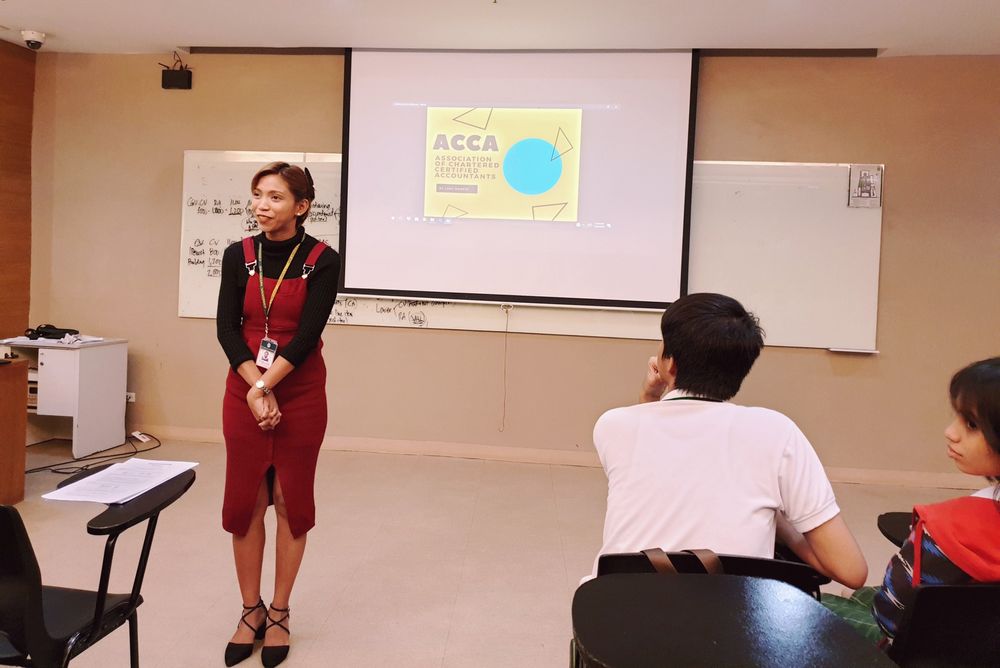
Endings.

I am a little late ending this course and finishing my requirements. My father died the term I was actually taking EDS 113. I am not anymore motivated to continue finishing it and have accepted that term that I may be failing this course. But I think my Father never let me down again. So, I got this chance. Thankfully, I had this chance.

As expected, the modules prepared by Dr. Lou will be comprehensive. These modules are interesting and informative. Though, it is tiresome at some points but as you continue digging, you will really be able to be fed by something good.

Principles of assessment is a course that I personally need as I am in the academe for almost a decade. You know, when you love something that you do – you actually make time to learn it more. That is how I felt about teaching.

I am an accountant. But I chose to teach. I took my MBA and now, I want to take something about teaching.

Thankfully, I have enrolled this specific course. I have realized a lot of things about assessment. While I thought, it is just a simple thing like creating an examination or a quiz but this course made me realize that assessment is indeed a complex task. But if done correctly, it will give information that will be a big contribution to instructional design and even in curriculum development.

That is why, I have realized that we, educators should be very careful when it comes to creating our assessments. We should realize first a lot of things as to the type, purpose, and the impact it can do to our students. Also, I realized more about the value of feedback, assessment cycle and even the framework.

I won’t be putting my learnings here one by one because that will be a very long list. Thanks to Dr. Lou.

With my learnings here, I would like to believe that there are changes and developments that I will be doing in my future classes. Making sure that the assessments I have will be valid, reliable and meaningful.

Cheers to happy endings!

REALizatiONs – Module 7

On Failures, Mistakes and Zeroes, I would say that initially these are negative words.

These bring sadness and a feeling of not being enough. It means that you have not worked that hard and you lack of something.

But I realized, as educators, we should change the mindset of our students about it. While we do not want them to have zeroes, mistakes and failures, we should at least prepare their hearts and minds if ever that happen.

In my experience, telling them about my personal stories of zeroes, mistakes and failures somehow calm them and make their mindset more ready if ever these things will happen.

You got Zero? then get 100 the next time.

You committed a mistake? then learn from it!

You failed? then re-take and succeed!

There is nothing wrong about these words for as long as you are learning from it.

Because for every zeroes, mistakes and failures, we are just becoming better.

REALizations – Module 5

As an educator (current or future), what kinds of assessment do (will) I prefer to give?  Why?

I have realized through this module that there is a lot more about assessments, its types and purposes.

Now, as a current educator, I may say that I have been using various types of assessments and I think that having a multiple measures in assessing my students would still be the best choice. Meaning, I cannot just give a summative type or a formal one, it should be a good mix of all so that I can get a sufficient evidence when it comes to learning.

But of course, as I choose several types of assessment, I should make sure that it won’t be that many or burdensome to my students. I do not want them to feel very much stressed in accomplishing a lot.

I think we should also consider the time allotted for the students to accomplish it all.

Multiple Measure, Quality of Assessments, Quantity of Assessments, Time are the things that I consider in the assessments that I give my students. After all, what we would want to get is the evidence that they are making progress, right?

REALizatiONs – Module 4

What enlightened values have you gained on the topic?

For me, the value that should be in there when it comes to Self and Peer Assessment is Honesty.

I have experienced a self-evaluation as a department head way back then. I truthfully answered but it felt bad that the faculty under me graded themselves a perfect 5 when there is no clear evidence how they got that 5. It was disappointing. How can you help them if they see themselves that way? They lack research but graded their own selves a perfect one. They lack university involvement but gave themselves a perfect grade. See? How can I identify their weakness and help them when there is no truthfulness in their self-evaluation?

For me, in order for these kinds of assessments to succeed, participants should be honest and truthful to whatever grade they are to encode. Because a truthful evaluation would make a fair feedback, and from there we can redesign instructions or as a student, our habits.

Imagine if the assessment results are lies, then how can we ever get a good out of it?

Indeed, Honesty is the best policy 🙂

REALizatiONs – Module 3

Using my new understanding about assessment purposes and alignment, how do I
now evaluate my personal experiences with assessment as a learner or as a
professional?

I have realized that when designing an assessment, it is important to know the purpose by which we are giving the assessment. Also, to ensure the validity and reliability of a certain assessment, it should be aligned to the learning outcomes.

It made me realize that there should be a framework or a system by how we do assessments and it is not as easy as it look like. To take note that each type of assessment has its own purpose that it serves.

The next time, I design my assessments for my students, I will be more careful and make sure that I choose the right one and that I ensure the alignment with the learning outcomes.

It is already 2020 and we need an Upgrade.

Not because it is done that single way, all of us must do it that way. Because, it is already 2020 and we have a lot of means for us to have a meaningful assessment process.

It is not just a one way street. There are MULTIPLE ways. Realizing that there are probably different measures that we can do in assessment would mean different ways to have a better evaluation of our students’ performance.

Maybe, time will always be a limiting factor especially for us in the academe but I hope that we will never get discouraged of using an upgraded assessment kit to better measure our students’ performance. For me, it will be helpful to have multiple measures and multiple ways of gathering evidence when it comes to assessment.In my opinion, it may look burdensome but if we really look at the main objective, it is something that is essential to do especially if we want a more holistic result or assessment output.

While it is a fact that we should be time conscious when it comes to attaining our course plan but I think it is also essential to be conscious too when it comes to the tools that we use for assessment and give importance as well to things like the indirect way of gathering evidence. It may be time consuming but are we not doing a more meaningful experience of learning to our students by giving them more chances of being “measured” ?

For me, having a multiple measures in the classroom would really help upgrade the learning experience that our students have. And that should always be the vision that we have whenever we open a semester and that is to make each learning day fruitful, productive and properly assessed. After all, it is already 2020 and I think we are ready for an upgrade.

AssessMeant to be…

Assessment is meant to be meaningful if we use the right instrument and if we use it for the right purpose.

I realized with the content of the first module that assessment is an important process within the learning cycle. For learning to be effective, there should be a relevant assessment within. A relevant assessment should never be the same forever. It must upgrade and continuously updated. Because what is a good assessment way back 10 years ago may not be a good assessment for today’s settings. We must make our assessment flexible enough so that we can get the output that we want.

A relevant assessment doesn’t stop by giving grades and it is really refreshing to know that it goes beyond that. Having a good study about the results and making a good fruit out of it is another meaningful part of the process. It can be a good source of improvement when it comes to teaching, learning and assessing.

Assessment is indeed a cycle. Continuous in nature and Permanently changing as time goes by. The terminology may stay the same but the method that comes with it is changing and upgrading. Assessment? It is meant to be a good tool to enhance our learning experience.

Who is Lady?

I am Lady. I am a Certified Public Accountant but I chose teaching as my profession. My students would call me “Ma’am Laidz”. It was a dream come true for me when I started teaching. This is a job that feels like not a work at all. I’ve been enjoying every single lecture that I do. I’ve been teaching in different universities for almost eight years. I love meeting new people that’s why every term I am really excited to meet my new students because for me, new students means new experiences and stories to tell. And I have so many stories to tell and I do the story telling through writing. I love writing during my free time about anything under the sun. So, I hope you will be enjoying my write-ups here. Thanks!

Design a site like this with WordPress.com
Get started